
Journal Entries to Issue Stock Financial Accounting
Content
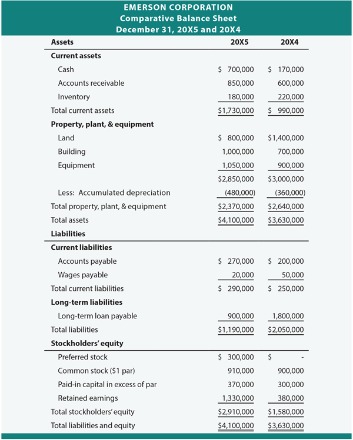
Although the fluctuating market price of stocks has no effect on the books, par value has a legal bind on part of the company to its investors – no shares will be sold below that price. Next, find the “Common Stock” line item, listed below the preferred stock line item. Identify the number of common shares issued, and the par value per share. In this example, assume the company has 10,000 common shares issued with a par value of $1 per share. Run the same calculation as before by multiplying the number of common shares issued by the par value per common share to calculate the par value of common stock.
Ultimately, a share is worth what an investor is willing to pay for it. Gain in-demand industry knowledge and hands-on practice that will help you stand out from the competition and become a world-class financial analyst. APIC represents the proceeds a company receives from a stock offering over and above the stock’s par value. Hearst Newspapers participates in various affiliate marketing programs, which means we may get paid commissions on editorially chosen products purchased through our links to retailer sites. Blue list is a daily listing of bonds, mostly of the tax-exempt municipal variety, that are currently for sale by banks and dealers.
MANAGING YOUR MONEY
For example, a company might have issued 1,000 preferred shares with a par value of $1 per share. A company typically sets the value as low as possible because it cannot sell shares to shareholders at less than par value. Additional paid-in capital is the incremental value that investors are willing to pay for the stock above the par value of shares issued. For example, a company might have common stock with a par value of $5, but investors are willing to pay $20 for it.
That means corporations are not having any legal obligations to their debt holders. For unimproved real estate.This is a rather unusual example because Microsoft’s par value is so low. But this is how it’s done, regardless of the dollar amounts involved. https://kelleysbookkeeping.com/ The Balance uses only high-quality sources, including peer-reviewed studies, to support the facts within our articles. Read our editorial process to learn more about how we fact-check and keep our content accurate, reliable, and trustworthy.
The balance sheet caption for common stock is the following: Common stock, $3 par value,…
As you can see in the visual below, the par value is set by the company and that is what is required to common stock. The difference between the par value and market price is considered additional paid-in capital . Shares usually have no par value or low par value, such as one cent per share does not reflect a stock’s market price. Some states require that companies set a par value below which shares cannot be sold. A financial instrument’s par value is determined by the institution that issues it. Market value is the current price at which a bond or stock can be traded on the open market and constantly fluctuates as investors buy and sell bonds and shares of stock.
- Knowing how to find stated value of common stock per share is important for accounting purposes.
- Par value has different implications depending on whether it’s for a bond or stock.
- If a share is issued to an owner, management will assign it a value and accounting will record this transaction.
- The amount gets credited to the corporation’s account for capital stock and will be the legal capital of that corporation.
- Rhode Island, for instance, will assign a value of $0.01 per share.
Even in jurisdictions that permit the issue of stock with no par value, the par value of a stock may affect its tax treatment. For example, Delaware permits the issue of stock either with or without a par value, but by choosing to assign a par value, a corporation may significantly reduce its franchise tax liability. However, if you have millions of “no par value” shares, you’ll end up paying tens of thousands of dollars in franchise How To Calculate Par Value Of Common Stock taxes. On the other hand, if you have millions of shares with very low par value, you can use the other calculation method and potentially pay as little as $400 . In some states, like Alabama, Ohio, Delaware, and New York, you’re not required to have par value at all—shares can be categorized as “no par value” shares. On New York’s standard Certificate of Formation form, the state even lists a “suggested” 200 shares at no par value.
Bankruptcy & the Effect on the Corporate Shareholder
The par value is the amount of money a bond issuer promises to repay bondholders at maturity. Shares usually have no par value or low par value, such as one cent per share. Full BioCierra Murry is an expert in banking, credit cards, investing, loans, mortgages, and real estate.
- The actual common stock value and the par value of common stock inherently and fundamentally differ.
- If the share price paid is lower than par, you receive a higher rate of return than the dividend rate.
- This reduction in par value is made to lower the market price of the stock to make the stock more attractive to potential investors.
- That means you can’t distribute any of that five grand as dividends; you have to hang on to it to protect the corporation and investors in case things go south.
- The coupon rate is the interest payment made to bondholders, annually or semi-annually, as compensation for loaning the bond issuer money.
- If there is a need to calculate the par value differently, then one can figure it out using a common stock calculator.